The Ultimate Beginner’s Guide to Choosing Motorcycle Tires
Welcome to the world of motorcycling! Whether you've just bought your first bike or you're preparing for your first tire change, the world of motorcycle tires can feel overwhelming. You’ll hear terms like "bias-ply," "radial," and "dual-compound," and it might sound like a foreign language. Don't worry, it’s much simpler than it seems.
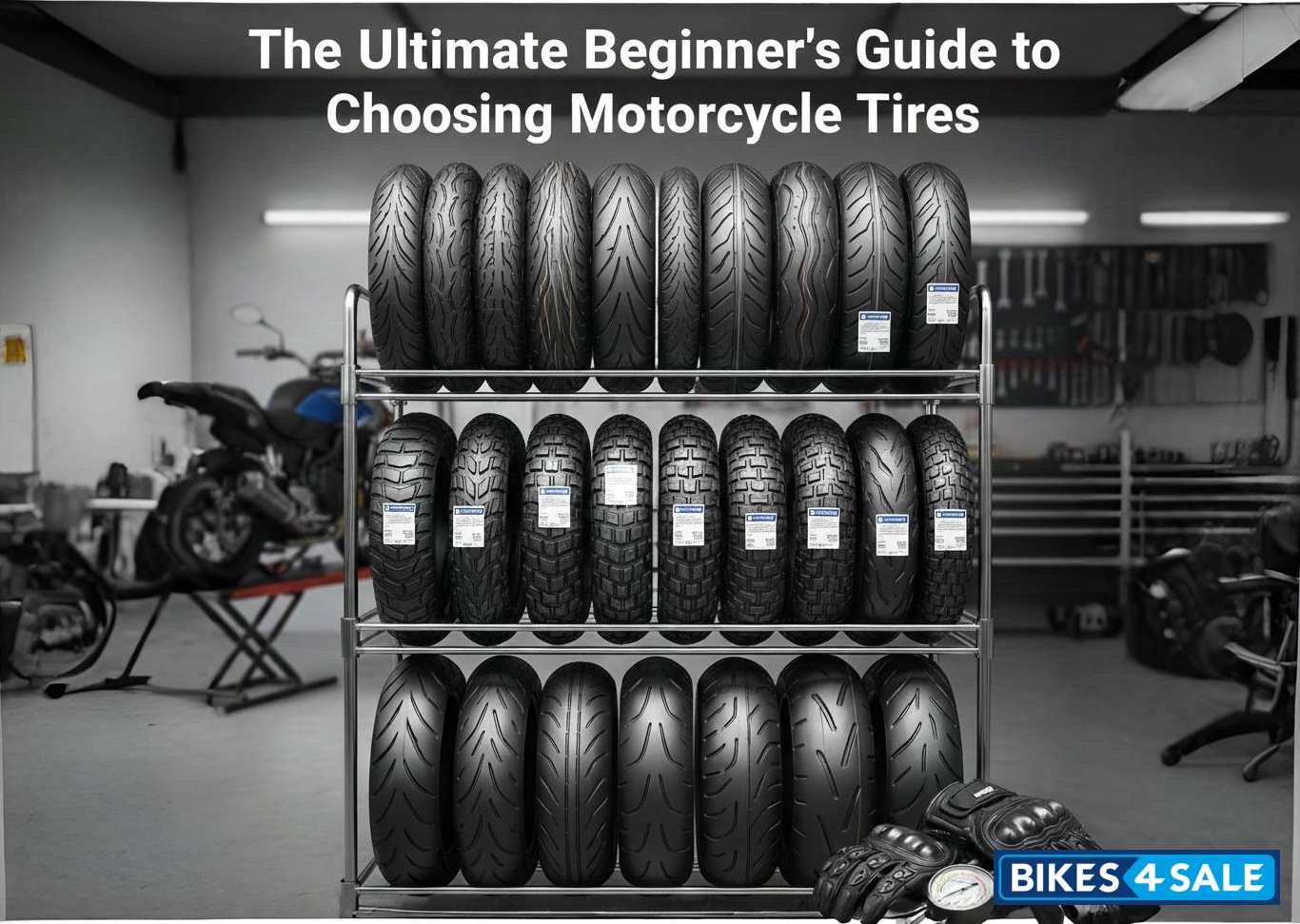
Think of your tires as the four-square-inch patches connecting you and your bike to the road. They are arguably the most crucial components for your safety. Choosing the best motorcycle tire isn't about buying the most expensive set; it's about buying the right set for your specific bike and riding style. This guide will break down everything you need to know about motorcycle tire selection in simple, clear steps.
The first and most important step in choosing the right tires is knowing your bike's type and how you actually ride it. Trying to fit racing slicks on a touring cruiser or knobby off-road tires on a sportbike simply won't work—and it can be dangerous.
What Kind of Rider Are You?
Before you look at a single tire, be honest with yourself about where you spend most of your time riding.
• The Commuter/Casual Rider: You mainly use your bike for short trips, city riding, and occasional highway runs. You need durable motorcycle tires that last a long time and perform well in all weather conditions, especially the wet.
• The Sport Rider/Canyon Carver: You love cornering, accelerating hard, and spirited riding on weekend twisties. You prioritize maximum grip and performance over high mileage.
• The Long-Distance Tourer: You spend hours on the highway, often with luggage and a passenger. You need tires with exceptional durability, high load capacity, and great comfort for long stretches.
• The Adventure/Dual-Sport Rider: You ride on paved roads and gravel, dirt, or trails. You need a versatile tire that offers a good compromise between on-road stability and off-road traction.
Understanding your riding type will immediately narrow down your search for the best motorcycle tire model.
Every motorcycle tire has a series of numbers and letters on its sidewall. This is the tire's identity, and you must match it exactly to your manufacturer's recommendation, found in your owner’s manual or on a sticker near the swingarm.
Let's look at a common example: 120/70 ZR17 M/C (58W)
Pro Tip: Never use a tire with a lower Load or Speed rating than what your manufacturer recommends. Using the wrong tire dimensions can be incredibly unsafe.
The tire construction affects performance and stability, especially at higher speeds and loads.
1. Bias-Ply (or Cross-Ply): The internal cords (plies) cross each other diagonally.
• Pros: Strong sidewalls, great for heavier bikes, suitable for lower-speed commuting and older motorcycles.
• Cons: Less stable at high speeds, can build up heat quickly, generally less grip.
• Look for a hyphen (-) in the sidewall (e.g., 180/65 - 16).
2. Radial: The internal cords run straight across the tire from bead to bead, reinforced by separate belts under the tread.
• Pros: Better grip and handling, lower heat buildup, excellent high-speed stability.
• Cons: Softer sidewalls, usually higher cost.
• Look for an 'R' in the sidewall (e.g., 180/65 R 16).
For most modern sport, sport-touring, and high-performance bikes, radial motorcycle tires are the standard. Older or lighter commuter bikes often use bias-ply.
This is where manufacturers try to achieve the ultimate balance. The rubber compound determines how sticky the tire is, while the tread pattern handles water and debris clearance.
1. The Compound: Grip vs. Longevity
• Soft Compound: Offers maximum grip for performance riding. It heats up quickly and is essential for cornering, but it wears out faster.
• Hard Compound: Offers much longer mileage and durability. It’s perfect for straight-line commuting and touring but provides less grip for aggressive lean angles.
• Dual-Compound Technology: Many modern tires offer the best of both worlds—a harder compound in the center strip for long highway life and a softer compound on the shoulders for maximum cornering grip. This is a great choice for the everyday rider who enjoys a spirited weekend ride.
2. The Tread Pattern: Water and Versatility
The grooves, or sipes, in the tread are there to push water out from under the tire, preventing hydroplaning.
• Sport/Street Tires: Typically have less aggressive tread patterns (more rubber touching the road) to maximize grip in dry conditions. The grooves are there primarily for wet weather traction.
• Touring Tires: Feature deeper, wider grooves for efficient water dispersal, prioritizing stability and long life over ultimate dry grip.
• Dual-Sport/ADV Tires: Have a blocky, knobby pattern. The deeper blocks (tread blocks) dig into loose surfaces like dirt and gravel to provide off-road traction.
You should always treat your motorcycle tires as an investment in your safety. Don't simply choose the cheapest option.
Most reputable tire manufacturers offer excellent entry-level and sport-touring tires that are perfect for beginners. These tires offer a great blend of long life and reliable grip.
Remember that even the best motorcycle tires need proper care to deliver their full performance and last a long time.
1. Check Tire Pressure: This is the most important thing you can do. Always follow the pressure numbers listed on your bike's swingarm or in the owner's manual, NOT the maximum pressure printed on the tire itself. Use a quality gauge once a week. Maintaining correct tire pressure is critical for safe handling.
2. Check Tread Depth: The legal minimum tread depth is low, but you should replace your tires long before you hit that limit, especially if you ride in the wet. Most tires have small wear indicators (tiny bars in the main grooves). If the tread is worn down to the indicator, it’s time for a change.
3. Check Tire Age: Look for the DOT code on the sidewall—a four-digit number that shows the week and year of manufacture (e.g., '3524' means the 35th week of 2024). A tire that is 5-7 years old, even if it has decent tread, can have degraded rubber compounds.
Choosing the right motorcycle tire is a crucial part of being a responsible and safe rider. Start by understanding your riding needs—are you a commuter, a sport rider, or a tourer? Then, match the correct tire size, construction (radial or bias-ply), and compound/tread pattern to that need. Sticking to well-known motorcycle tire brands and performing regular checks on your tire pressure and wear indicators will keep you rolling safely and confidently for thousands of miles.
Think of your tires as the four-square-inch patches connecting you and your bike to the road. They are arguably the most crucial components for your safety. Choosing the best motorcycle tire isn't about buying the most expensive set; it's about buying the right set for your specific bike and riding style. This guide will break down everything you need to know about motorcycle tire selection in simple, clear steps.
Step 1: Know Your Bike and Your Riding Style
The first and most important step in choosing the right tires is knowing your bike's type and how you actually ride it. Trying to fit racing slicks on a touring cruiser or knobby off-road tires on a sportbike simply won't work—and it can be dangerous.
What Kind of Rider Are You?
Before you look at a single tire, be honest with yourself about where you spend most of your time riding.
• The Commuter/Casual Rider: You mainly use your bike for short trips, city riding, and occasional highway runs. You need durable motorcycle tires that last a long time and perform well in all weather conditions, especially the wet.
• The Sport Rider/Canyon Carver: You love cornering, accelerating hard, and spirited riding on weekend twisties. You prioritize maximum grip and performance over high mileage.
• The Long-Distance Tourer: You spend hours on the highway, often with luggage and a passenger. You need tires with exceptional durability, high load capacity, and great comfort for long stretches.
• The Adventure/Dual-Sport Rider: You ride on paved roads and gravel, dirt, or trails. You need a versatile tire that offers a good compromise between on-road stability and off-road traction.
Understanding your riding type will immediately narrow down your search for the best motorcycle tire model.
Step 2: Decode the Sidewall (The Tire's Secret Language)
Every motorcycle tire has a series of numbers and letters on its sidewall. This is the tire's identity, and you must match it exactly to your manufacturer's recommendation, found in your owner’s manual or on a sticker near the swingarm.
Let's look at a common example: 120/70 ZR17 M/C (58W)
| Segment | Meaning | Detail |
|---|---|---|
| 120 | Tire Width | The width of the tire in millimeters (mm). |
| 70 | Aspect Ratio (Profile) | The height of the sidewall, expressed as a percentage of the width (70% of 120mm). |
| ZR | Construction Type/Speed Rating | Z is the speed rating (over 240 km/h). R stands for Radial construction. |
| 17 | Rim Diameter | The diameter of the wheel rim in inches. |
| M/C | Motorcycle Use | Confirms it's for a motorcycle. |
| 58 | Load Index | A code for the maximum weight the tire can safely carry (check charts for exact kg). |
| W | Speed Rating | The maximum speed the tire can handle at its maximum load (W is 270 km/h or 168 mph). |
Pro Tip: Never use a tire with a lower Load or Speed rating than what your manufacturer recommends. Using the wrong tire dimensions can be incredibly unsafe.
Step 3: Understanding Tire Construction: Bias-Ply vs. Radial
The tire construction affects performance and stability, especially at higher speeds and loads.
1. Bias-Ply (or Cross-Ply): The internal cords (plies) cross each other diagonally.
• Pros: Strong sidewalls, great for heavier bikes, suitable for lower-speed commuting and older motorcycles.
• Cons: Less stable at high speeds, can build up heat quickly, generally less grip.
• Look for a hyphen (-) in the sidewall (e.g., 180/65 - 16).
2. Radial: The internal cords run straight across the tire from bead to bead, reinforced by separate belts under the tread.
• Pros: Better grip and handling, lower heat buildup, excellent high-speed stability.
• Cons: Softer sidewalls, usually higher cost.
• Look for an 'R' in the sidewall (e.g., 180/65 R 16).
For most modern sport, sport-touring, and high-performance bikes, radial motorcycle tires are the standard. Older or lighter commuter bikes often use bias-ply.
Step 4: Compound and Tread Pattern: Grip vs. Life
This is where manufacturers try to achieve the ultimate balance. The rubber compound determines how sticky the tire is, while the tread pattern handles water and debris clearance.
1. The Compound: Grip vs. Longevity
• Soft Compound: Offers maximum grip for performance riding. It heats up quickly and is essential for cornering, but it wears out faster.
• Hard Compound: Offers much longer mileage and durability. It’s perfect for straight-line commuting and touring but provides less grip for aggressive lean angles.
• Dual-Compound Technology: Many modern tires offer the best of both worlds—a harder compound in the center strip for long highway life and a softer compound on the shoulders for maximum cornering grip. This is a great choice for the everyday rider who enjoys a spirited weekend ride.
2. The Tread Pattern: Water and Versatility
The grooves, or sipes, in the tread are there to push water out from under the tire, preventing hydroplaning.
• Sport/Street Tires: Typically have less aggressive tread patterns (more rubber touching the road) to maximize grip in dry conditions. The grooves are there primarily for wet weather traction.
• Touring Tires: Feature deeper, wider grooves for efficient water dispersal, prioritizing stability and long life over ultimate dry grip.
• Dual-Sport/ADV Tires: Have a blocky, knobby pattern. The deeper blocks (tread blocks) dig into loose surfaces like dirt and gravel to provide off-road traction.
Step 5: Budget and Top Beginner Motorcycle Tire Brands
You should always treat your motorcycle tires as an investment in your safety. Don't simply choose the cheapest option.
Most reputable tire manufacturers offer excellent entry-level and sport-touring tires that are perfect for beginners. These tires offer a great blend of long life and reliable grip.
| Tire Category | Recommended Models | Key Features |
|---|---|---|
| Sport-Touring | Michelin Road Series (like Road 6), Pirelli Angel GT II, Dunlop Roadsmart IV. | Excellent all-weather performance, high mileage, dual-compound technology. |
| Commuter/Street | Michelin Pilot Street, MRF Masseter-X, CEAT Milaze. | Maximum longevity, affordability, reliable performance for city speeds. |
| Cruiser/Custom | Dunlop American Elite, Metzeler Cruisetec, Michelin Commander III. | High load capacity, robust construction, focused on comfort and stable straight-line riding. |
Final Checks: Maintenance and Tire Health
Remember that even the best motorcycle tires need proper care to deliver their full performance and last a long time.
1. Check Tire Pressure: This is the most important thing you can do. Always follow the pressure numbers listed on your bike's swingarm or in the owner's manual, NOT the maximum pressure printed on the tire itself. Use a quality gauge once a week. Maintaining correct tire pressure is critical for safe handling.
2. Check Tread Depth: The legal minimum tread depth is low, but you should replace your tires long before you hit that limit, especially if you ride in the wet. Most tires have small wear indicators (tiny bars in the main grooves). If the tread is worn down to the indicator, it’s time for a change.
3. Check Tire Age: Look for the DOT code on the sidewall—a four-digit number that shows the week and year of manufacture (e.g., '3524' means the 35th week of 2024). A tire that is 5-7 years old, even if it has decent tread, can have degraded rubber compounds.
Choosing the right motorcycle tire is a crucial part of being a responsible and safe rider. Start by understanding your riding needs—are you a commuter, a sport rider, or a tourer? Then, match the correct tire size, construction (radial or bias-ply), and compound/tread pattern to that need. Sticking to well-known motorcycle tire brands and performing regular checks on your tire pressure and wear indicators will keep you rolling safely and confidently for thousands of miles.

 Best Electric Road Bikes USA 2026 | Top 10 Models
 Top 10 Cafe Racer Motorcycles in USA (2026 List)
 How to Choose the Right Motorcycle Helmet (2026 Guide)
 Best Beginner Gravel Bikes for New Riders
 Do I Need a Professional Bike Fit? Benefits Explained
 What Brand of Motorcycle Is the Most Reliable? Top Brands Compared
 What Type of Bike Should I Get for Commuting? A Complete Beginner’s Guide
 What Is the Most Comfortable Motorcycle to Ride in the USA?