The Future of Clutchless Motorcycles: Which System Delivers the Better Riding Experience?
Motorcycles are changing fast. Riders today want more comfort, less fatigue in traffic, and easier everyday usability without losing the excitement that makes motorcycles special. That demand has pushed manufacturers to develop smarter transmission systems that reduce rider effort while keeping the experience engaging.
For years, fully automatic scooters and DCT motorcycles existed for riders who wanted convenience. But many enthusiasts still preferred traditional manual bikes because they offered more control, better connection with the machine, and a more rewarding riding feel.
That is exactly where systems like Honda E-Clutch and Yamaha Y-AMT enter the picture.
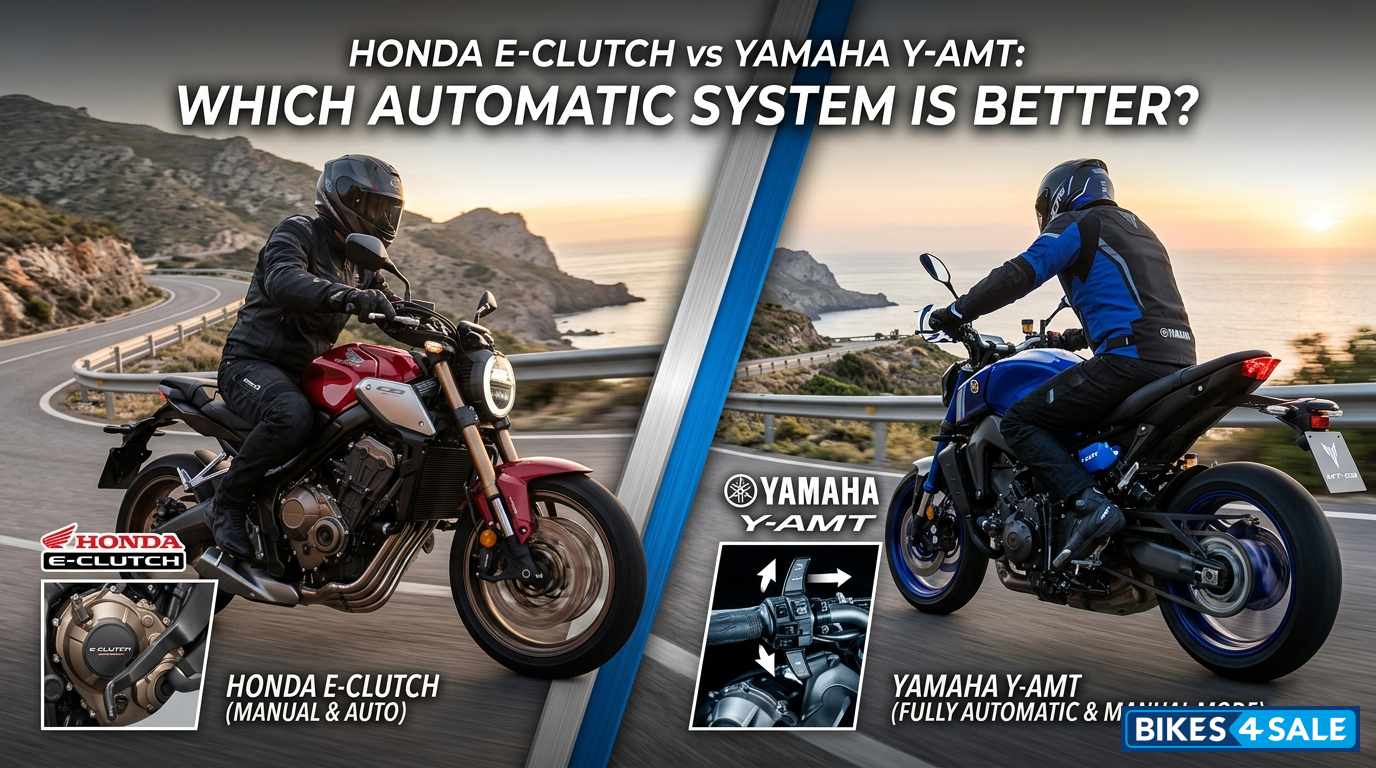
Both technologies aim to simplify riding while preserving the feel of a manual motorcycle. But they approach the problem very differently. Honda focuses on keeping the traditional gearbox experience intact while removing clutch operation. Yamaha, meanwhile, pushes further toward electronic automation with advanced actuator-controlled shifting.
So which one is actually better?
The answer depends on what kind of rider you are, how much control you want, and whether you prioritize convenience or engagement.
Let’s break it all down.
Honda E-Clutch is a clutch control system that allows riders to shift gears without manually operating the clutch lever. The motorcycle still uses a traditional gearbox, and riders still select gears using the foot shifter just like a standard manual motorcycle.
The key difference is that the clutch itself is electronically controlled.
When the rider changes gears or starts moving from a stop, the system automatically manages clutch engagement. This removes one of the most demanding parts of riding while keeping the rest of the manual experience largely intact.
Honda E-Clutch uses sensors and electronic actuators to monitor throttle position, engine speed, vehicle speed, and gear changes. The system instantly controls clutch engagement whenever needed.
From the rider’s perspective, the process feels natural. You simply start the bike, select first gear, and ride away without touching the clutch lever. Upshifts and downshifts happen through the foot shifter as usual, but the system handles clutch operation automatically in the background.
Unlike a fully automatic transmission, Honda still expects the rider to decide when to shift gears.
One clever part of the system is that the clutch lever still works normally. Riders can use it manually whenever they want. That flexibility makes the transition easier for experienced riders who occasionally prefer traditional clutch control.
Honda E-Clutch feels surprisingly close to a normal motorcycle. That is probably its biggest strength.
The rider still interacts with the bike in a familiar way. You use the foot shifter, control engine braking manually, and choose your own shift points. The system simply removes clutch workload. In city traffic, this makes a huge difference. Constant stop-and-go riding becomes smoother and less tiring. Beginners also benefit because stalling becomes much less likely.
At higher speeds or during spirited riding, the system still allows the motorcycle to feel mechanical and connected rather than heavily computerized.
Honda first introduced the technology on the CB650R and CBR650R. These middleweight motorcycles were chosen because they appeal to both newer riders and experienced enthusiasts. The company is expected to expand E-Clutch into additional categories over time, including sport touring and adventure motorcycles.
Yamaha Y-AMT, which stands for Yamaha Automated Manual Transmission, takes automation further than Honda E-Clutch.
Instead of only controlling the clutch, Yamaha electronically manages both clutch operation and gear shifting. Riders can either let the bike shift automatically or control shifts electronically through buttons mounted on the handlebars.
The traditional foot shifter is removed entirely. This creates a riding experience that blends manual motorcycle performance with modern automatic convenience.
Yamaha Y-AMT uses electronically controlled actuators to handle clutch and transmission functions. Sensors continuously monitor riding conditions, throttle input, speed, and engine load.
In automatic mode, the system selects gears on its own based on riding conditions. In manual mode, riders can shift electronically using paddle-style controls without operating a clutch lever.
The gearbox itself remains mechanically similar to a standard motorcycle transmission, but rider interaction changes significantly because electronics now manage the shifting process.
One of Yamaha Y-AMT’s strongest features is flexibility.
In fully automatic mode, the bike behaves much more like an automatic vehicle. Riders simply accelerate and brake while the system handles shifting.
In manual mode, riders can still choose gears themselves, but shifts happen electronically through the handlebar controls rather than a foot shifter.
This dual personality allows the bike to adapt well to different riding situations.
During heavy traffic, riders can rely on automatic mode for comfort. On open roads or twisty sections, manual mode allows more control over gear selection.
Yamaha Y-AMT feels more modern and electronic compared to Honda E-Clutch.
Because there is no foot shifter or clutch lever, the riding experience changes noticeably. Some riders will appreciate the simplicity immediately, while others may miss the physical involvement of a traditional motorcycle.
The biggest benefit appears in urban riding and long-distance touring. Constant shifting becomes effortless, reducing rider fatigue significantly.
The system also delivers extremely consistent shifts because electronics control timing with precision.
Yamaha introduced Y-AMT technology on the MT-09 platform, signaling that the company sees it as a performance-oriented system rather than just a commuter feature. The technology may eventually spread into touring and adventure motorcycles where automatic functionality offers clear comfort benefits.
Honda and Yamaha are taking very different approaches to automatic motorcycle technology. Honda focuses on preserving the feel of a manual motorcycle, while Yamaha prioritizes automation and convenience.
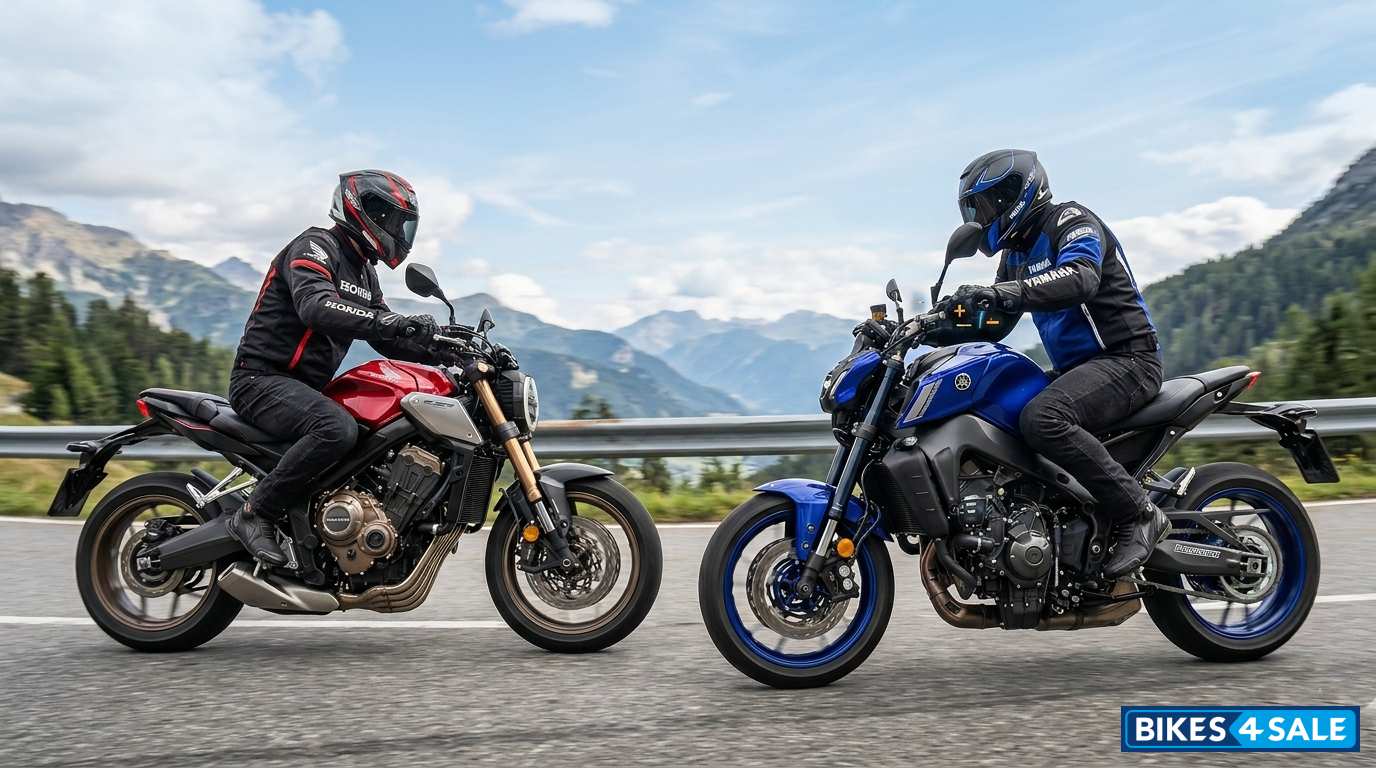
Honda E-Clutch and Yamaha Y-AMT take very different approaches to automatic motorcycle technology. Honda focuses on keeping the traditional manual riding feel while reducing clutch effort, making it a better choice for riders who still want strong rider involvement. Yamaha Y-AMT, meanwhile, prioritizes convenience with fully electronic shifting and automatic riding modes, making it more suitable for commuting and touring comfort.
Overall, Honda E-Clutch offers the better balance between convenience and traditional motorcycle feel, while Yamaha Y-AMT is ideal for riders who prefer maximum ease of use and modern automation.
For years, fully automatic scooters and DCT motorcycles existed for riders who wanted convenience. But many enthusiasts still preferred traditional manual bikes because they offered more control, better connection with the machine, and a more rewarding riding feel.
That is exactly where systems like Honda E-Clutch and Yamaha Y-AMT enter the picture.
Both technologies aim to simplify riding while preserving the feel of a manual motorcycle. But they approach the problem very differently. Honda focuses on keeping the traditional gearbox experience intact while removing clutch operation. Yamaha, meanwhile, pushes further toward electronic automation with advanced actuator-controlled shifting.
So which one is actually better?
The answer depends on what kind of rider you are, how much control you want, and whether you prioritize convenience or engagement.
Let’s break it all down.
What is Honda E-Clutch?
Honda E-Clutch is a clutch control system that allows riders to shift gears without manually operating the clutch lever. The motorcycle still uses a traditional gearbox, and riders still select gears using the foot shifter just like a standard manual motorcycle.
The key difference is that the clutch itself is electronically controlled.
When the rider changes gears or starts moving from a stop, the system automatically manages clutch engagement. This removes one of the most demanding parts of riding while keeping the rest of the manual experience largely intact.
How Honda E-Clutch Works
Honda E-Clutch uses sensors and electronic actuators to monitor throttle position, engine speed, vehicle speed, and gear changes. The system instantly controls clutch engagement whenever needed.
From the rider’s perspective, the process feels natural. You simply start the bike, select first gear, and ride away without touching the clutch lever. Upshifts and downshifts happen through the foot shifter as usual, but the system handles clutch operation automatically in the background.
Unlike a fully automatic transmission, Honda still expects the rider to decide when to shift gears.
One clever part of the system is that the clutch lever still works normally. Riders can use it manually whenever they want. That flexibility makes the transition easier for experienced riders who occasionally prefer traditional clutch control.
Riding Experience
Honda E-Clutch feels surprisingly close to a normal motorcycle. That is probably its biggest strength.
The rider still interacts with the bike in a familiar way. You use the foot shifter, control engine braking manually, and choose your own shift points. The system simply removes clutch workload. In city traffic, this makes a huge difference. Constant stop-and-go riding becomes smoother and less tiring. Beginners also benefit because stalling becomes much less likely.
At higher speeds or during spirited riding, the system still allows the motorcycle to feel mechanical and connected rather than heavily computerized.
Honda E-Clutch Advantages vs Drawbacks
| Advantages | Drawbacks |
|---|---|
| Preserves traditional manual riding feel | Not fully automatic |
| Reduces clutch fatigue in traffic | Riders still need to shift gears manually |
| Smooth clutchless upshifts and downshifts | Adds electronic complexity |
| Beginner friendly without removing rider involvement | Potentially higher repair costs long term |
| Allows optional manual clutch use | Less convenient than fully automatic systems |
| Lightweight compared to larger automatic systems | Some purists may still prefer a standard clutch setup |
Bikes Using Honda E-Clutch
Honda first introduced the technology on the CB650R and CBR650R. These middleweight motorcycles were chosen because they appeal to both newer riders and experienced enthusiasts. The company is expected to expand E-Clutch into additional categories over time, including sport touring and adventure motorcycles.
What is Yamaha Y-AMT?
Yamaha Y-AMT, which stands for Yamaha Automated Manual Transmission, takes automation further than Honda E-Clutch.
Instead of only controlling the clutch, Yamaha electronically manages both clutch operation and gear shifting. Riders can either let the bike shift automatically or control shifts electronically through buttons mounted on the handlebars.
The traditional foot shifter is removed entirely. This creates a riding experience that blends manual motorcycle performance with modern automatic convenience.
How Yamaha Y-AMT Works
Yamaha Y-AMT uses electronically controlled actuators to handle clutch and transmission functions. Sensors continuously monitor riding conditions, throttle input, speed, and engine load.
In automatic mode, the system selects gears on its own based on riding conditions. In manual mode, riders can shift electronically using paddle-style controls without operating a clutch lever.
The gearbox itself remains mechanically similar to a standard motorcycle transmission, but rider interaction changes significantly because electronics now manage the shifting process.
Automatic and Manual Modes
One of Yamaha Y-AMT’s strongest features is flexibility.
In fully automatic mode, the bike behaves much more like an automatic vehicle. Riders simply accelerate and brake while the system handles shifting.
In manual mode, riders can still choose gears themselves, but shifts happen electronically through the handlebar controls rather than a foot shifter.
This dual personality allows the bike to adapt well to different riding situations.
During heavy traffic, riders can rely on automatic mode for comfort. On open roads or twisty sections, manual mode allows more control over gear selection.
Riding Experience
Yamaha Y-AMT feels more modern and electronic compared to Honda E-Clutch.
Because there is no foot shifter or clutch lever, the riding experience changes noticeably. Some riders will appreciate the simplicity immediately, while others may miss the physical involvement of a traditional motorcycle.
The biggest benefit appears in urban riding and long-distance touring. Constant shifting becomes effortless, reducing rider fatigue significantly.
The system also delivers extremely consistent shifts because electronics control timing with precision.
Yamaha Y-AMT Advantages vs Limitations
| Advantages | Limitations |
|---|---|
| Fully automatic riding capability | Less traditional motorcycle feel |
| Extremely convenient in city traffic | Higher electronic complexity |
| Fast and precise electronic shifting | Potentially more expensive maintenance |
| Multiple riding modes improve versatility | Reduced mechanical engagement |
| Excellent touring comfort | Learning curve for electronic controls |
| Beginner friendly and easy to operate | More dependence on sensors and actuators |
Expected or Confirmed Yamaha Y-AMT Motorcycles
Yamaha introduced Y-AMT technology on the MT-09 platform, signaling that the company sees it as a performance-oriented system rather than just a commuter feature. The technology may eventually spread into touring and adventure motorcycles where automatic functionality offers clear comfort benefits.
Honda E-Clutch vs Yamaha Y-AMT: Technical Comparison
Honda and Yamaha are taking very different approaches to automatic motorcycle technology. Honda focuses on preserving the feel of a manual motorcycle, while Yamaha prioritizes automation and convenience.
| Comparison Area | Honda E-Clutch | Yamaha Y-AMT |
|---|---|---|
| Core Philosophy | Keeps the traditional manual riding feel while reducing clutch effort | Focuses on electronic automation and rider convenience |
| Clutch Operation | Automatic clutch control | Fully electronic clutch operation |
| Gear Shifting Method | Traditional foot shifter | Electronic handlebar controls |
| Manual Involvement | High rider involvement | Moderate rider involvement |
| Fully Automatic Capability | No | Yes |
| Riding Feel | Feels very close to a standard manual motorcycle | Feels more futuristic and electronically controlled |
| Ease of Use | Easy to adapt for manual riders | Extremely easy, especially in traffic |
| Beginner Friendliness | Good for learning manual riding basics | Excellent for complete beginners |
| Sport Riding Experience | More engaging and traditional | Fast and smooth electronic shifting |
| City Riding Comfort | Reduces clutch fatigue significantly | Excellent comfort in stop-and-go traffic |
| Touring Capability | Comfortable while still engaging | Better long-distance comfort due to automation |
| Traditional Motorcycle Feel | Excellent | Moderate |
| Technology Complexity | Moderate complexity | High electronic complexity |
| Weight Impact | Relatively lightweight | Slightly heavier due to additional electronics |
| Fuel Efficiency | Can improve efficiency through optimized clutch control | Can optimize shift timing automatically for efficiency |
| Reliability Expectations | Simpler setup may inspire greater long-term confidence | More dependent on electronic systems and actuators |
| Maintenance Requirements | Closer to traditional motorcycle servicing | May require more advanced diagnostics and servicing |
| Long-Term Ownership | Likely easier for traditional riders to maintain | Better suited for riders comfortable with advanced electronics |
| Best Suited For | Enthusiasts who still want manual involvement | Riders prioritizing comfort and convenience |
Which is Best to Consider?
Honda E-Clutch and Yamaha Y-AMT take very different approaches to automatic motorcycle technology. Honda focuses on keeping the traditional manual riding feel while reducing clutch effort, making it a better choice for riders who still want strong rider involvement. Yamaha Y-AMT, meanwhile, prioritizes convenience with fully electronic shifting and automatic riding modes, making it more suitable for commuting and touring comfort.
Overall, Honda E-Clutch offers the better balance between convenience and traditional motorcycle feel, while Yamaha Y-AMT is ideal for riders who prefer maximum ease of use and modern automation.


 The 10 Most Expensive Motorcycles Ever Made
 Top-Rated Gas Scooter Brands in the US (2026)
 10 Best Electric Commuter Motorcycles in the USA (2026)
 Top 10 Best 50cc Scooters in the USA (2026)
 Top 7 Women's Road Bikes for USA 2026 - Best Picks
 Top 5 125cc Motorcycles for USA 2026 - Best Beginner Bikes
 Best e-bikes for seniors with arthritis or joint pain (2026)
 10 Best E-Bikes for Seniors in Australia 2026